EduConflict
Education in Conflict Zone
Research Project funded by SSHRC (N/réf. 430-2019-00879) at the UQAM.
The project
EduConflict, a research initiative, has garnered recognition and financial backing from the Social Sciences and Humanities Research Council (SSHRC) of Canada (N/réf. 430-2019-00879).
This scholarly endeavor primarily focuses on the intricate dynamics of education in the milieu of conflict and emergency scenarios. It encompasses an array of challenging situations, such as the impediments to children's education caused by ongoing conflicts, the direct or indirect ramifications of warfare on educational institutions, and the pressures exerted on educational systems by parties engaged in hostilities.
The Team
The research undertaken by the EduConflict team is dedicated to assessing the resilience and adaptability of education systems in the face of conflict and emergencies. Essentially, the investigation seeks to elucidate the mechanisms through which educational processes persist and adapt during and subsequent to conflicts. To achieve a comprehensive understanding, the project's researchers engage in extensive fieldwork, focusing on specific conflict zones where education is significantly intertwined with conflictual dynamics.
Additionally, they delve into the psycho-cognitive effects experienced by individuals exposed to these conflict-education intersections, thereby contributing to a deeper comprehension of the issue at hand.
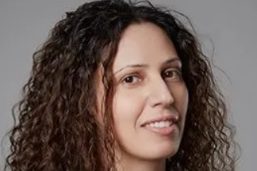
Chirine Chamsine
Chirine Chamsine is professor at the University of Quebec in Montreal and principal investigator in this project.
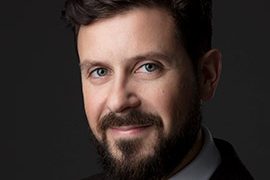
Olivier Arvisais
Olivier Arvisais is professor at the University of Quebec in Montreal and co-investigator in this project.
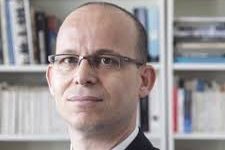
Mathieu Guidère
Mathieu Guidere is professor at the University of Paris-Lumières (France) and co-investigator in this project.
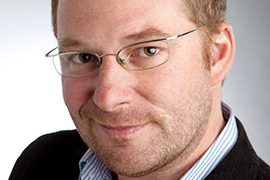
Patrick Charland
Patrick Charland is professor at the University of Quebec in Montreal and co-investigator in this project.

Vivek Venkatesh
Vivek Venkatesh is professor at the University of Concordia and co-investigator in this project.
The Method
The preferred methodological framework for collecting data is based on methods used in the field of research in humanitarian contexts, more precisely the methodology of grounded theory (GTE) (Glaser & Strauss, 2009).
The choice of this research method is explained by the fact that GTE adapts well to the reality of a humanitarian operation as a research field (Almonte, 2009; Klumpp et al., 2015; Koddenbrock, 2015), and that the project aims to support for educational programs of NGOs working with children who were educated by ISIS.

The objectives
The objectives are theoretical and practical and use quantitative and qualitative research tools:
Objective 1
Semi-automatic extraction of vocabulary used in school textbooks (quantitative research)
Objective 2
Comparative study of semantic similarities (qualitative research)
Objective 3
Study of practices reported by teachers (field research)
Objective 4
Study of the impact of the conflict on the targeted communities (field research)